
Oil reaches 40 of Gaza's 700 water and sewage generators
With the machines at a fifth of capacity, crews are supplying drinking water first and collecting sewage second, and have stopped clearing rubble altogether. If the pumping stations halt, the wastewater reaches the shelters.
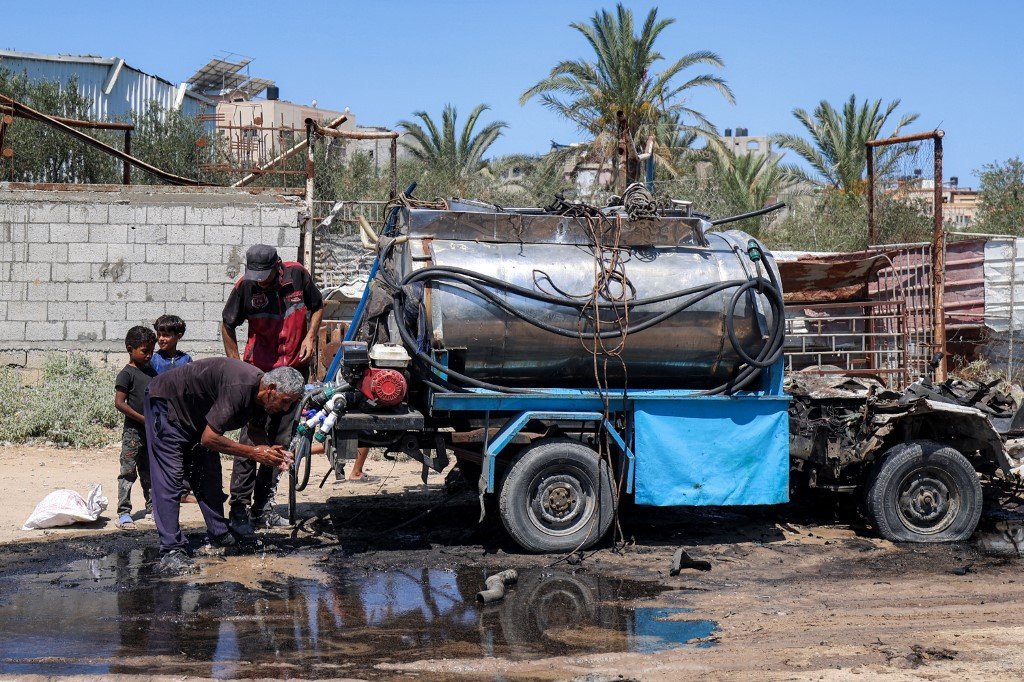
The Union of Gaza Strip Municipalities warned on Tuesday that the territory is close to a joint water and sanitation failure, with more than two million people short of drinking and household water and the sewage stations at risk of stopping for want of fuel. Alaa al-Batta, the union's deputy head and the mayor of Khan Younis, set out the figures at a press conference.
Around 700 generators keep the municipal wells, pumps and treatment stations running, he said, and the lubricating oil allowed in has been enough for roughly 40 of them. What little remains on the local market now sells for about ten times its former price. The machines still turning are producing a fifth of their rated output or less.
That has forced the municipalities to ration their own work. Drinking and household water is served first and sewage collection second; rubble clearance has been suspended outright. No diesel earmarked for that work has arrived since March, and the quantities before then were small and came through international organisations.
The immediate danger al-Batta described is what follows if the pumping and treatment stations stop. Wastewater would rise into the streets and into the sites where displaced families are living, in a stretch of high summer temperatures — the conditions in which waterborne and infectious disease moves fastest.
He asked the United Nations, the wider international community and the three mediating states — Egypt, Türkiye and Qatar — to secure passage for fuel, spare parts and equipment, and to open a dedicated corridor for municipal supplies. He also asked for protection for the technical crews repairing the networks, and said responsibility for the failure now approaching rests with Israel.
Water and sanitation are the services least able to absorb a gap in fuel. A clinic can be kept going by one delivered generator; wells, pumping stations and treatment plants need hundreds of them running without pause, with oil and parts arriving on a schedule rather than in occasional consignments. That is how a shortfall counted in barrels of engine oil ends as contaminated water in a displacement camp.