
Gaza City buries 50 people found after three years in the rubble
Civil Defence crews spent weeks pulling the remains out of five neighbourhoods with a single excavator. Some 8,000 people are still thought to lie under the debris.
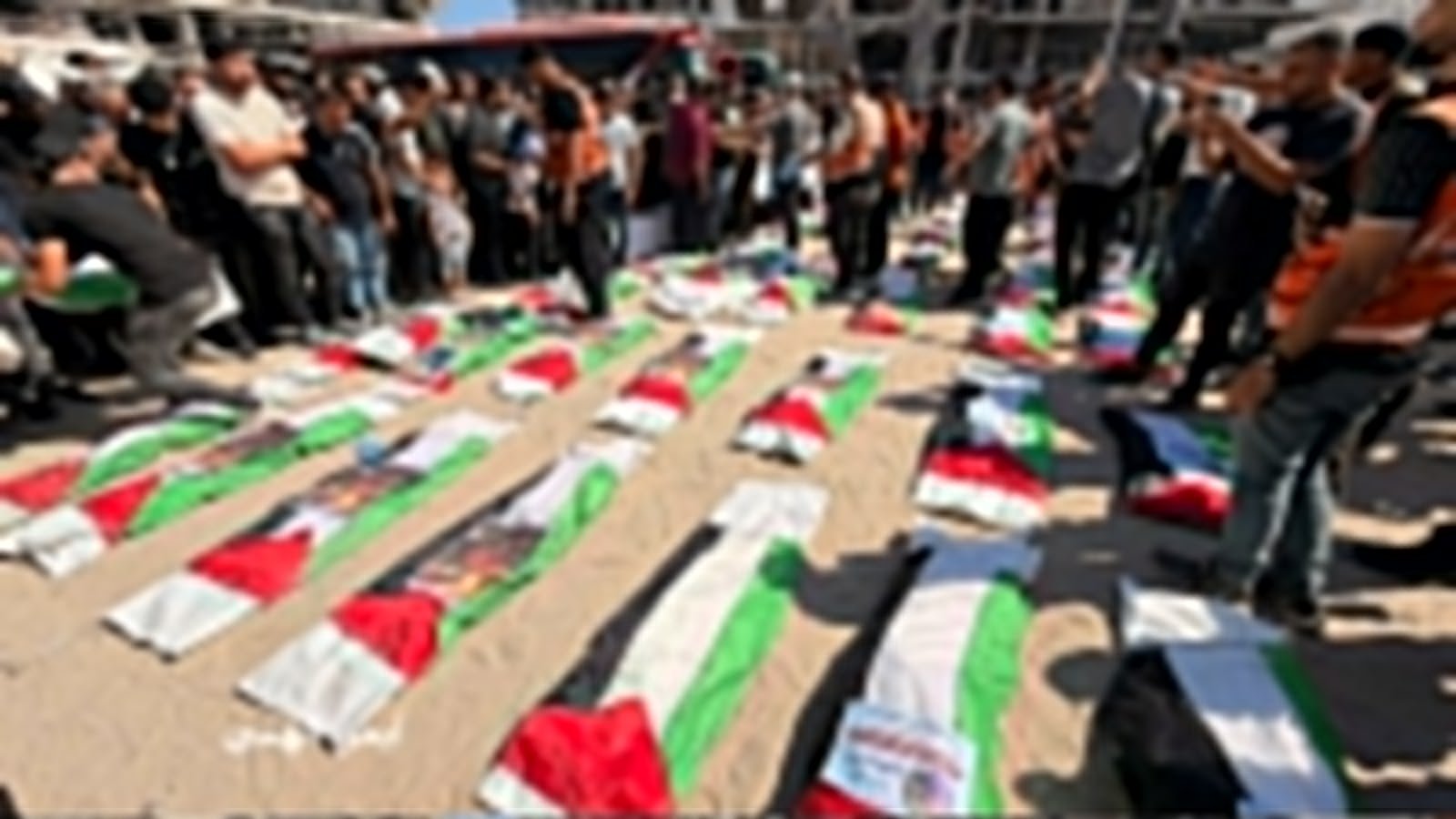
Gaza's Civil Defence buried the remains of 50 people in Gaza City on Thursday, most of them women and children, after its crews spent weeks lifting them out of homes brought down by Israeli attacks in the first months of the war in 2023.
The crews worked across Tel al-Hawa, Zeitoun, Sabra, Sheikh Radwan and the Shati refugee camp. Among the families who came to collect what was found were the Sawafiri, the Batniji and the Gharbia.
In many cases what came up was not a body. Teams recovered bones, fragments and personal effects — what nearly three years underground had left — and what the crews found was collected at the Al-Shifa Medical Complex, where relatives came to take it away.
The whole operation rests on one excavator, which is moved from site to site. Money for the work arrived a few weeks back, from the International Committee of the Red Cross, and covers 800 hours of recovery work across the entire Strip, and its crews cannot enter the areas Israeli forces hold — roughly 70 percent of the territory, with Palestinians pressed into the remaining 30.
An estimated 60 million tonnes of rubble lie across Gaza, and the remains of about 8,000 people are believed to be beneath it. Thursday's burial was the second recovery of its kind in a short span; an earlier one returned 112 people from a single destroyed residential area, also after nearly three years.
Munir al-Barsh, director-general of the health ministry in Gaza, said one machine cannot answer a task of that size, and called for heavy equipment, search gear and forensic supplies — DNA testing among them — to be allowed in so that those recovered can be named.
He also warned that the debris holds millions of tonnes of asbestos-bearing material, which breaks down into dust, is breathed in and causes lung disease including cancer, and he asked for protective equipment for the crews who spend their days in it.
"Every missing person has a name and a family waiting for them," al-Barsh said. For the households that buried their dead on Thursday the waiting ended after nearly three years. For thousands of others it has not, and the machinery that would end it is still outside the Strip.