
Israeli threats over kites should go to the ICC, monitor says
Ramy Abdu wants the statements filed as evidence with international bodies, and argues that pursuing children over a game cuts against the child-rights convention's Article 31.
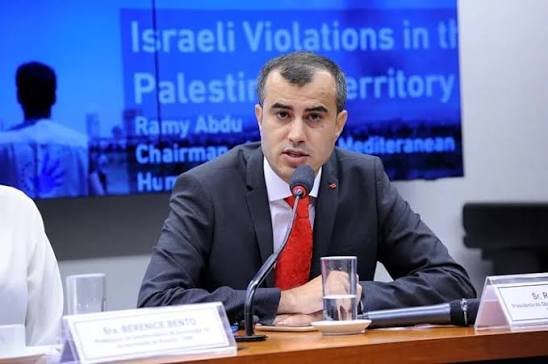
Ramy Abdu, who heads the Euro-Mediterranean Human Rights Monitor, said on Friday that Israel's handling of kites flown by children in Gaza as a security matter belongs to a longer pattern, in which everyday civilian acts are recast as provocations and then used as grounds for air strikes, evacuation orders and forced displacement.
He said the framing does two things at once. It pulls attention away from what he called the aggression imposed on the Strip for years, and from Israel's refusal of the road map agreed in Cairo; and it builds a political and media case, in advance, for an escalation that he said has already begun in the heavier bombardment of recent days.
The legal objection he set out is narrow. The Convention on the Rights of the Child gives children particular protection in armed conflict, and its Article 31 recognises a right to rest, leisure and play suited to a child's age. Pursuing or punishing children for playing cuts against both, Abdu said. The objection sharpens, in his account, when the rhetoric comes from official or semi-official bodies rather than from individuals, because at that point it carries the weight of policy and reads as collective punishment.
What he asked for is that the episode be treated as evidence rather than as noise. Israeli statements about the kites should be added to complaints already lodged with international mechanisms, among them the International Criminal Court, as further material on violations of Palestinian children's rights. He asked European and other governments to move past condemnation to measures with a cost attached, urged campaigners to press the case in European parliaments, and proposed that children elsewhere fly kites in solidarity with those in Gaza. The least Gaza's children are owed, he said, is to be able to play "without restrictions or coercion".
The dispute began after Israel's defence minister, Israel Katz, said he and Prime Minister Benjamin Netanyahu had ordered the military to apply a policy of "zero containment and zero tolerance" to the launches, which Palestinians deny were meant to cause harm. Israeli television carried photographs of one kite caught in a tree near Nahal Oz and another that had come down at Re'im. The US-led body that oversees the ceasefire plan then issued its own warning against the launches, describing them in the terms Israel had used, as armed activity.
Abdu's wider point is about the boundary rather than the object. If a paper toy can be entered on the list of things that count as a security threat, the list has no fixed edge; and the protections that are meant to hold for civilians, and for children in particular, are narrowed a little more each time it is extended.