
In Surif, stone walls mark generations of work on the land
The town northwest of Hebron reads its own history off the terraces its families built by hand, and off the olive and fig trees planted between them.
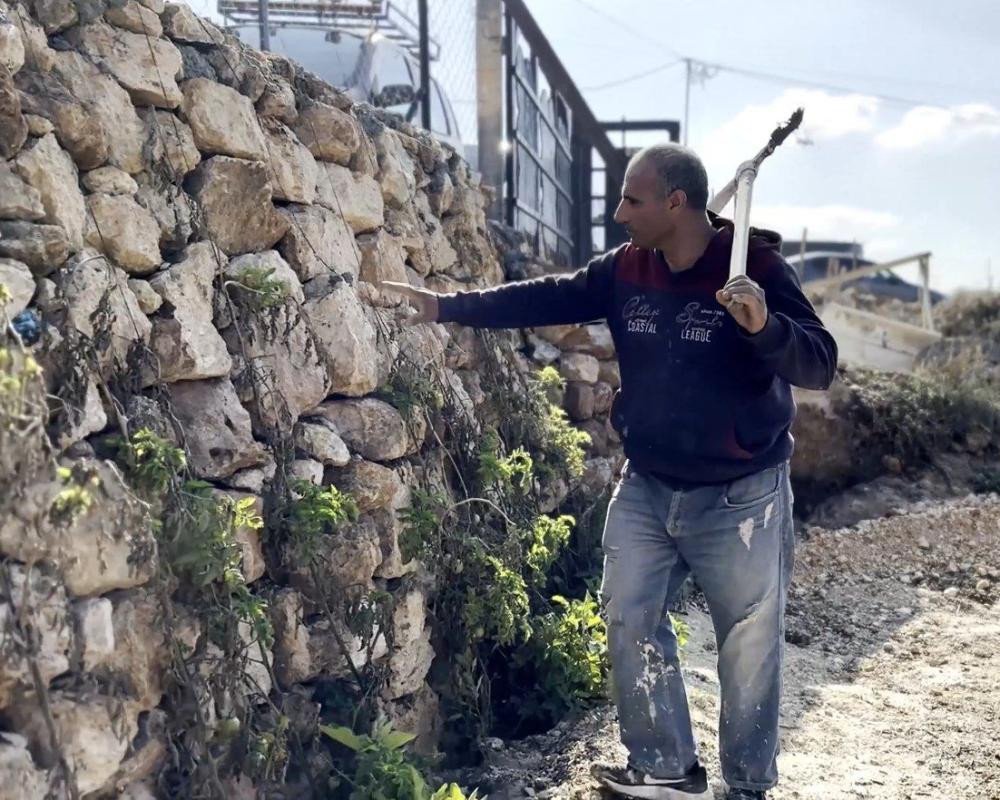
The stone walls running across the hillsides of Surif, a town about 20 kilometres northwest of Hebron in the occupied West Bank, were raised by the families who cleared and farmed the ground beneath them. Residents there do not treat the walls as leftover masonry but as evidence of that labour, standing among the olive and fig trees the same families planted.
The town sits high among mountain peaks, and its name is traditionally traced to the phrase Sur al-Rif, a reference to that terrain. Its cultural inheritance runs from the Roman period through to the present.
Ali Abu Farah, a historian, described Surif as a symbol of Palestinian steadfastness rather than simply a place on a map, calling it "the lungs through which we breathe". He said the town was shaped by the sacrifices of the people who defended their hold on the land, and paid tribute to those who built, dug and ploughed so that what they made would outlast them.
For Bashar Hmeidan, who lives in Surif, keeping any of that means handing it on. "We learned from our grandparents how they loved the land and worked it as if it were their most precious treasure," he said. The generation now raising children in the town, he said, carries the same duty towards them: teaching them the worth of the land and how to look after what was left in their care.
The distinction matters in a place where heritage is often documented for visitors rather than used. In Surif it survives in the ordinary run of the year — in the olive groves, the walls and fields that are still worked as they pass from parents to children — which is also why its condition depends on whether the families can keep reaching and working the land at all.