
West Bank Olive Harvest Marred by Violence and Access Restrictions
Farmers face settler attacks, uprooted trees, and military barriers as the annual harvest season begins under escalating pressure.
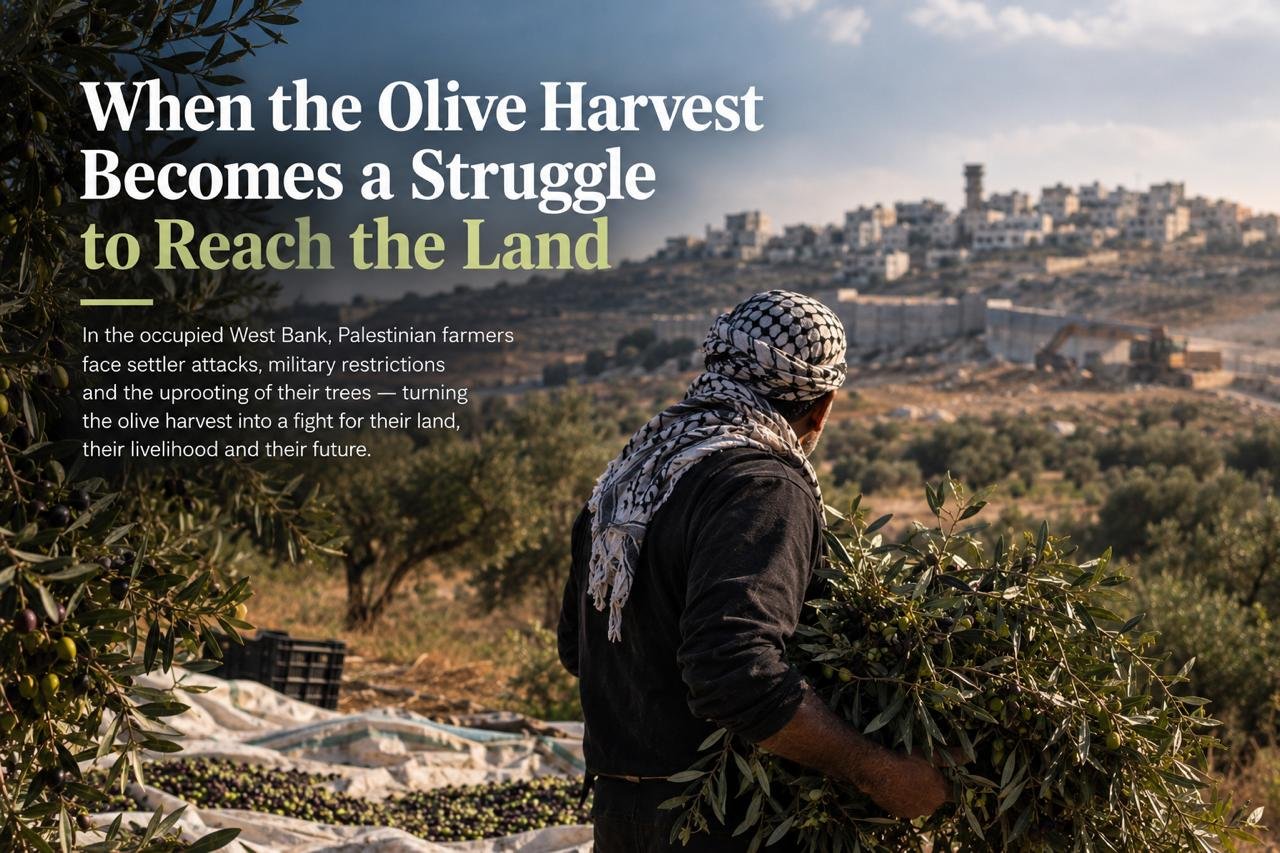
In the occupied West Bank, the olive harvest traditionally signifies family unity and cultural connection to the land. This year, however, Palestinian farmers confront blocked roads, military orders, and violent settler attacks just as the season begins.
The harvest preparation starts long before picking begins. Families recall ancestral trees while children learn to spread sheets beneath branches. Neighbors coordinate before dawn, carrying the scent of bread and coffee into fields that define their heritage.
October usually means returning to the land, but many farmers now question if they can reach it. A growing web of restrictions includes checkpoints, agricultural gates, and permit requirements that complicate access to ancestral groves across the region.
Israeli settlers have increasingly entered farmland to attack farmers and steal crops. In September, military bulldozers uprooted olive trees near Deir Nizam days before harvesting began. Abd Alfattah Tamimi watched machinery destroy his family’s nine acres of trees.
Tamimi stated that neighbors also lost their trees, leaving them with nothing. Landowner Nasser Tamimi noted the painful timing, as his family usually produces significant amounts of olive oil. The destruction occurred before the harvest could even commence.
Data from August shows 628 settler attacks affecting hundreds of Palestinians and damaging thousands of trees. The United Nations recorded over 1,600 attacks between January and August 2026, averaging nearly seven incidents daily across numerous communities in the territory.
Movement obstacles have risen significantly, with over nine hundred recorded by late 2025. Many closures block agricultural land, while gates along the separation barrier remain mostly closed. Restricted access causes substantial drops in olive production for affected farmers.
Despite losses, farmers vow to replant and return. The Ministry of Agriculture plans support campaigns for vulnerable areas. Each return to the grove asserts ownership and continuity, challenging efforts to empty the land through violence and bureaucratic restriction.