
A year on, Mariam Abu Dagga's killing is still unexplained
The journalist died with at least five colleagues at Nasser Medical Complex; the Israeli military says its own review is still running, and her family wants an independent inquiry.
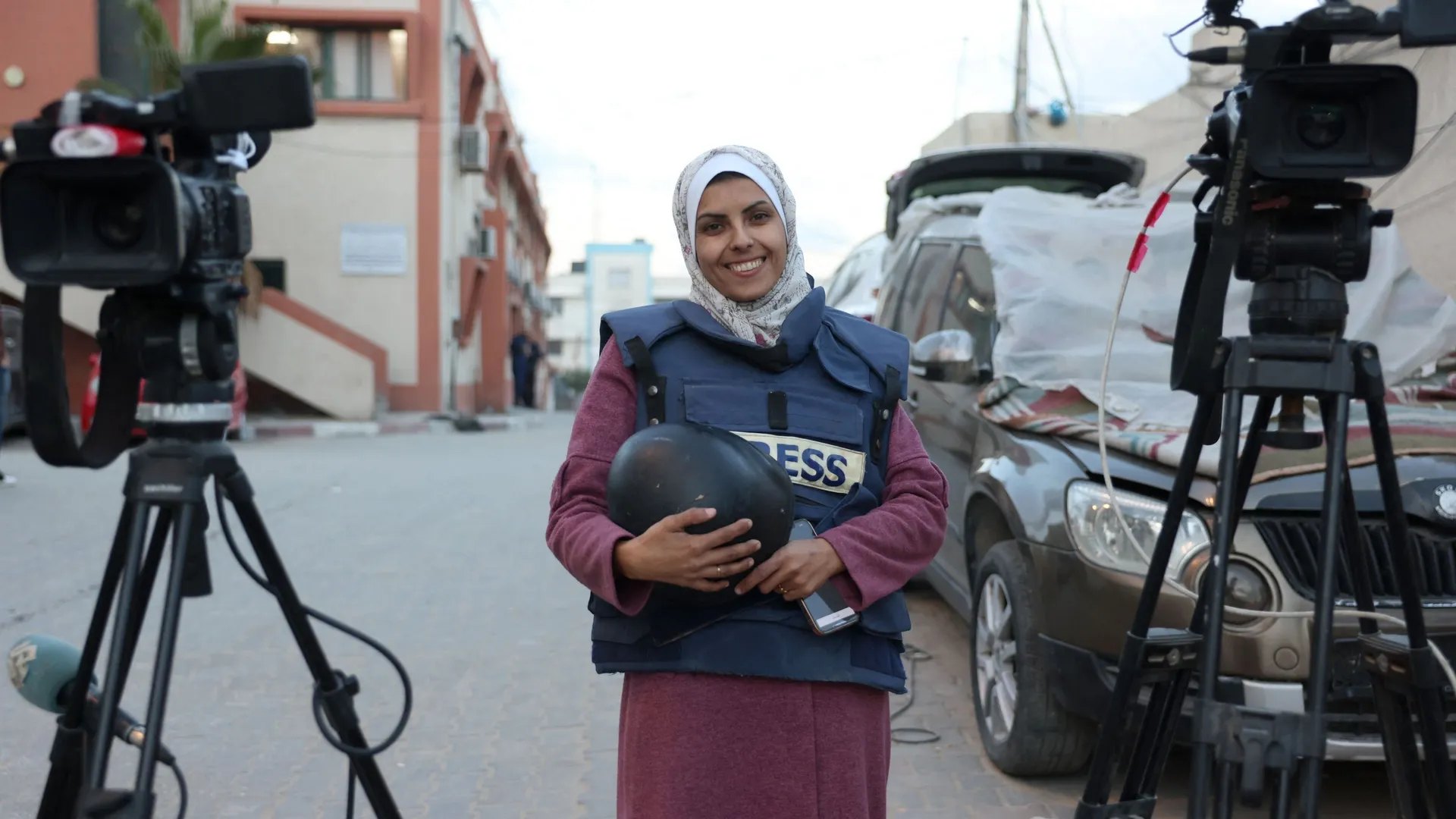
The Palestinian journalist Mariam Abu Dagga was killed a year ago at the Nasser Medical Complex in Khan Younis, hit by successive rounds of Israeli tank fire while she was reporting from the hospital. She was 33.
Abu Dagga worked for Independent Arabia and the Associated Press. At least five other journalists were killed in the attack on the hospital, along with medical staff, and 22 Palestinians died in the two strikes.
It is the sequence of that fire her family and colleagues want examined. The second round came down on people who had gathered at the site after the first, the pattern commonly called a double-tap strike.
The British newspaper The Independent, whose Arabic edition she reported for, has published detailed findings on the attack and called for those responsible to be held to account. It said it put the findings to the Israeli military and sought answers on specific violations.
The military did not respond substantively to the findings, saying only that its review was still under way through its general staff fact-finding and assessment mechanism. Her family and colleagues say an internal Israeli review cannot produce accountability, and are asking for an independent international investigation to establish what happened inside the hospital and who should answer for it.
A ceremony was held in Gaza on Tuesday to mark the year since the strike.
Abu Dagga knew what she was risking. She had sent her teenage son to the United Arab Emirates as the war escalated, and had written a will as Israeli forces closed in on the hospital where she worked. Her mother died of cancer in 2024, when treatment in Gaza had become hard to reach, and Abu Dagga had earlier given one of her kidneys to her father.
More than 200 Palestinian journalists have been killed since 2023, on a count kept by the Committee to Protect Journalists — the heaviest toll of any conflict in the organisation's records.
Foreign reporters remain largely unable to work independently inside Gaza. That has left the documenting of the war to Palestinian journalists, who cover it from the same places where they and their families live through it.