
After a double amputation, a Gaza builder turns to a garden
Mahmoud Skik lost both legs on 7 November 2023 and with them the construction work that fed his children. He now raises green peppers in whatever containers he can gather, and says no outside help has reached him.
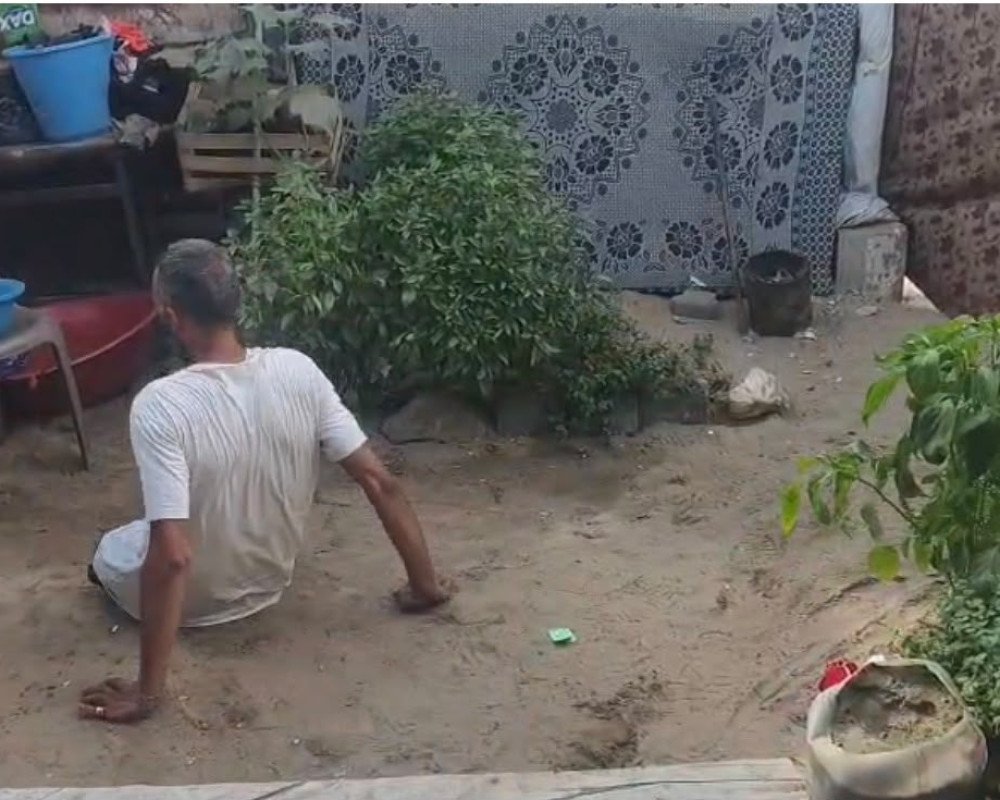
The construction work that kept Mahmoud Abdel Karim Skik's children fed ended on 7 November 2023, the day he was wounded in Gaza and had both legs amputated. Almost three years later he is raising green peppers in whatever containers and scraps of ground he can gather.
What weighs on him is not chiefly the injury but what followed it. "The biggest pain is not only losing my legs. It is stopping my life and being unable to work for my children," he said.
Nothing comes in now. "When it comes to income, I have nothing," he said, describing a daily search for food and water for the household. He has sold possessions at times to meet its costs.
Things his children point out in the markets stay out of reach, and he says he answers them that they will find them in heaven. He would want a few of those things for himself as well.
Growing plants had been a pastime before the injury. He has since made it into a small enterprise, working with the seedlings, tools and containers he can lay hands on, and his pepper plants are beginning to set fruit. Keeping them alive takes water and agricultural treatments that are hard to come by in the Strip.
What stops the plot getting any bigger is the absence of support from outside it. Money, equipment and supplies would let him make fuller use of the space he has, he said; none has arrived. For the moment the value of the garden is less what it earns than what it restores — a day with work in it, and a measure of the independence the war took.
He puts himself among a group he says has been left near the bottom of Gaza's priorities: people with disabilities, and especially those disabled by the war, short of the services and support they need. Had he lost one leg instead of two, he believes, going back to a building site might have been within reach.
To others hurt in the war he offers the argument his own plants are making: that a wound is not where a life stops, and that what a person still has is worth working with.