
Camps by Gaza's Yellow Line report 20 litres of water a family
Managers of the displacement sites south of Zeitoun say the marker line was pushed westward, and that some aid organisations will no longer send teams to what is now the near side of it.
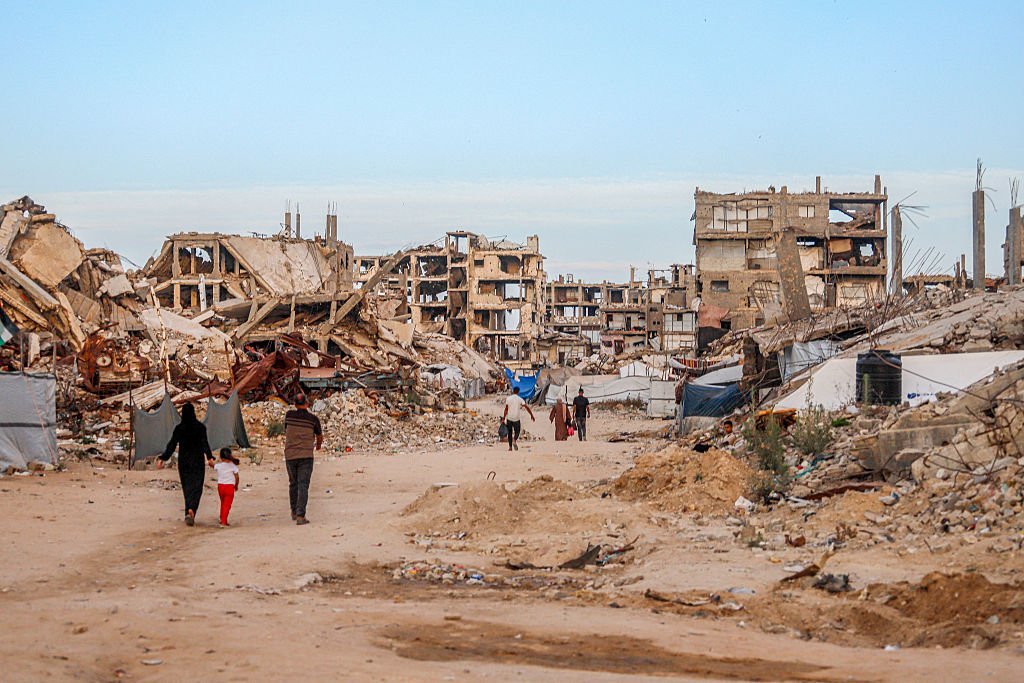
Managers of the displacement camps south of the Zeitoun neighbourhood, in Gaza City, said on Monday that a household of six or seven people in the camps is receiving about 20 litres of drinking water a day, and appealed for water, food, health care and shelter.
Sami Al-Dash, who oversees one of the sites, said Israeli forces had recently shifted the concrete markers that trace the Yellow Line further west, moving the boundary closer to tents that were already pitched at the edge of it.
That shift is the reason the appeal is being made now. Several aid organisations will not send field teams into the strip of ground nearest the line, according to camp manager Mohammad Shaldan, so the camps that need supplies most are the ones agencies are least willing to reach.
The camps have no basic medical point of their own, Al-Dash said, and ambulances have difficulty getting in at all. The nearest hospitals are far enough that a case which needs a vehicle is, in practice, a case that waits.
Schooling has thinned out for the same reason. Children walk about 1 kilometre to reach an educational facility, Shaldan said, and camp organisers report that attendance has fallen because families judge the walk unsafe.
Sanitation is shared and inadequate: families use communal toilets and the sites have no sewage network to speak of. Taysir Malaka, a public relations official at the camps, said rats have begun attacking residents, and that some families have abandoned their tents because of it.
About 200 widows are living in the camps, according to the managers — households with no second adult to walk the kilometre for water, queue for a distribution, or carry a patient to a road an ambulance can use.
The Yellow Line is a boundary drawn by the arrangements that followed the ceasefire, not a feature of the ground. Moving it costs nothing on the day it is moved, and what the camp managers are describing is the bill arriving afterwards: the same families, in the same tents, on the other side of a line that decides who will deliver to them.