
In Gaza's camps, lost businesses are remade from aid tins
UN Trade and Development counts 22 years of progress erased in under two years; in the tents that arithmetic reads as a gym rebuilt out of empty cans.
UN Trade and Development has called the collapse of Gaza's economy the most severe on record, setting the loss at 22 years of development in under two years.
Beneath that figure sit thousands of people who lost the livelihoods they had built before the war and have improvised new trades from what the Strip has left.
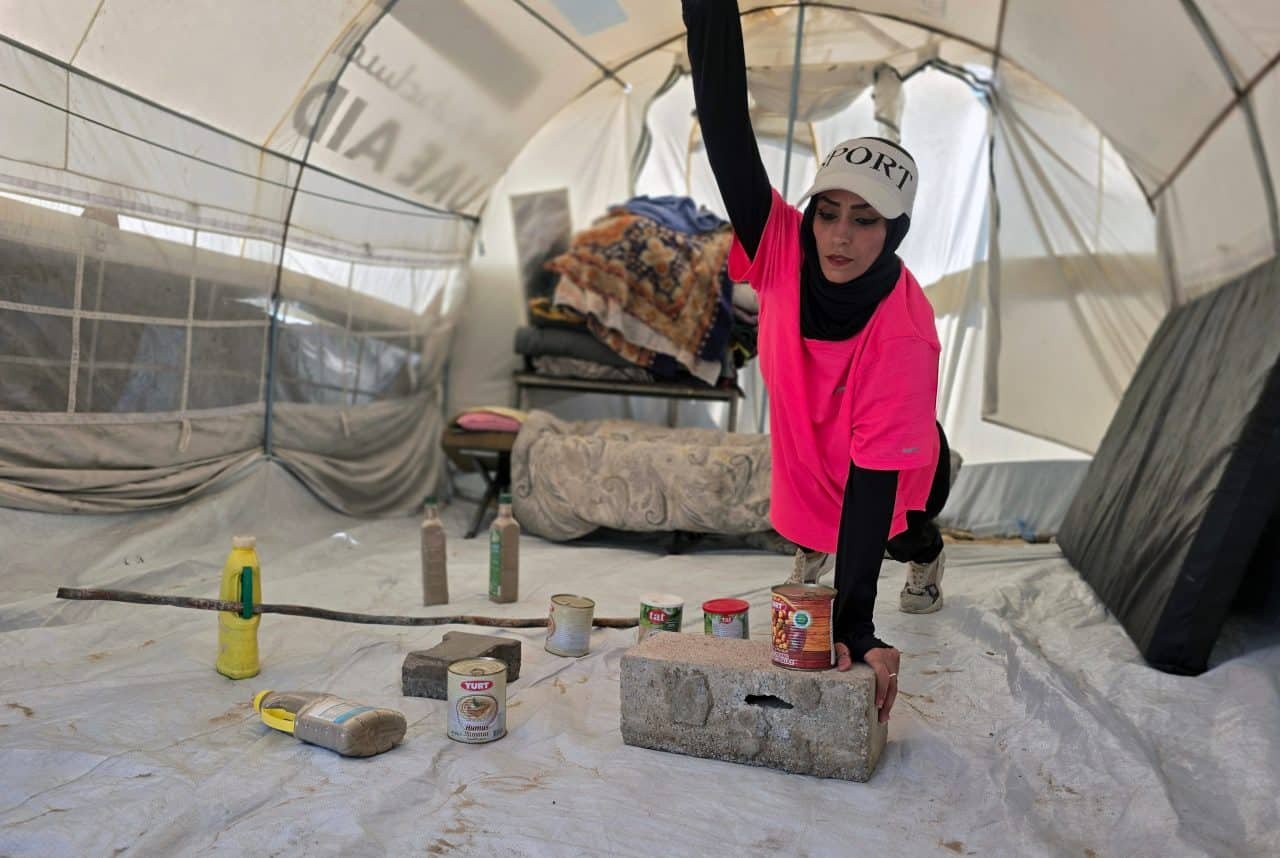
Iman Mughira, 33, had spent months and as much as $250,000 with several partners on a gym in Rafah. Displaced to al-Mawasi in Khan Younis, in the south of the Strip, she followed satellite imagery of her city until she could be certain the building was gone.
What she built next came out of the camp's rubbish. Empty food tins from aid parcels and discarded cooking-oil containers, packed with sand and fitted with lengths of wood, became weights. Women in the surrounding tents began keeping an hour a day to train, without travelling for it and without paying for it, and some came to her tent to exercise with her.
The complaints she heard were the ones displacement itself produces: muscle pain from sleeping on sand, from hauling belongings by hand, from carrying water and washing clothes without a machine.
Ayman Abu Muhareb, 44, kept a supermarket before the war. It was bombed and the goods left inside it were looted, and he now bakes bread at an oven his family built from mud and straw near a camp in Deir al-Balah, in central Gaza, to feed a household of eight that includes a daughter with a heart defect. He keeps the oven burning with wood, plastic and fabric, and says doctors have warned him repeatedly about the hours he spends in its smoke. He began a year ago, and his health has declined since.
Zeinab al-Najjar, 50, became her family's provider after her husband was injured and left using a wheelchair. Displaced to the seafront at Deir al-Balah, she sells lupini beans among the tents, starting in the afternoon once the heat drops and sometimes returning after midnight.
None of these trades restores what was lost, and reading them as recovery gets the story backwards. A gym worth a quarter of a million dollars becomes tins of sand; a supermarket becomes an oven that is costing the man tending it his health. This is what the UN's figure looks like at the scale of one household — and why 22 years of erased progress are not won back by people finding work again.