
Children who lost limbs learn to swim at a pool in al-Mawasi
A rehabilitation programme takes about 30 children at a time, starting each session with psychological support and ending it in the water.
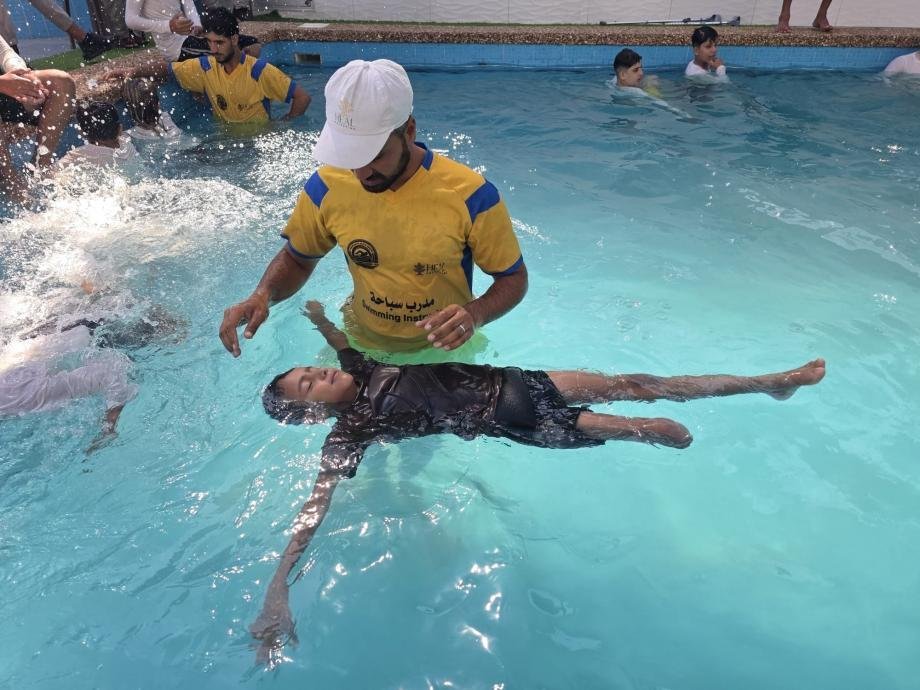
About 30 children in Gaza who have had limbs amputated are being taught to swim at a small pool in al-Mawasi, west of Khan Younis in the south of the Strip, on a rehabilitation programme run by Heal Palestine with the Tantish Swimming Academy.
Najwa Abu Amr, who coaches on the programme, said most of the children arrive frightened of the water and convinced that their injuries and the conditions of the war put swimming out of reach. Instructors take them in by degrees, she said, until they can swim without help.
The sessions do not begin in the pool. The children are given psychological support first, then warm-up exercises and games, before any of them goes into the water.
Mahmoud Rafiq Abu Shadaq, 14, lost a leg on 1 August 2025, wounded while his family was displaced, and spent close to a month in hospital. He describes the weeks that followed as the hardest he has lived through: getting out of bed was beyond him, so was reaching the bathroom unaided, and neither crutches nor a wheelchair came easily. Hunger ran alongside the injury — at times, he said, there was nothing to be had but bread with sand in it, and he ate that.
He had never swum before he was hurt. He was afraid of the water when the sessions started and now knows several strokes, and he wants to keep training and swim competitively.
Mena Ashour, 13, lost her leg in July 2025 when a strike hit a house next to the place her family had taken shelter in the Chalets area of Deir al-Balah. Shrapnel wounded her and her siblings, and her sister lost a leg as well. The family was already short of food and medicine and priced out of what was on sale — her mother once paid 60 shekels for a small quantity of grapes. She trains now at backstroke and three other strokes, and says her confidence has come back, though not all of it.
Swimming does something a prosthetic limb does not. It puts a child back among other children doing the same thing, at an age when being left out of that is its own injury, and it returns a measure of movement that the ward and the wheelchair had taken away. Abu Amr said the point is to move children out of withdrawal and into an activity they can enjoy as an ordinary part of their community.
What the programme reaches is a fraction of what is needed. Its organisers want to expand it, saying the number of children in Gaza living with an amputation is far beyond what one pool can take. Abu Amr puts the message behind it in three words — nothing is impossible — and says losing a limb should not cost a child the chance to learn, to play or to take part in sport.