
Five killed in two days, among them a farmer at al-Musaddar
Shells fired from armoured vehicles killed a man working land east of Deir al-Balah, and a strike on the western side of Khan Younis killed another the next day.
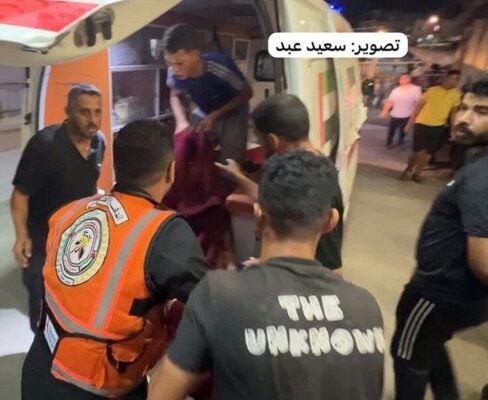
Four Palestinians were killed on Saturday in Israeli attacks spread across the Gaza Strip, and a fifth on Sunday, according to reports. The places named run the length of the Strip: Khan Younis and Rafah in the south, Deir al-Balah and the Bureij camp in the centre, Gaza City and the Jabalia camp in the north.
At al-Musaddar, east of Deir al-Balah, shells fired from Israeli military vehicles killed a farmer, Mohammad Fayeq al-Attar. The shelling coincided with a short advance by vehicles into the same area.
In the south, a drone strike on Khan Younis on Saturday evening killed Yasser Abu al-Khair and wounded several other people. A man was shot and wounded in the al-Satr al-Gharbi district of the city, and several more were hurt near al-Ard al-Tayyiba, one of them in a critical condition; ambulance crews took the wounded to hospital. Artillery shelled ground to the north-west of Rafah.
Two more of Saturday's dead were killed in Gaza City, when a drone hit an electric motorcycle in the Tal al-Hawa neighbourhood south-west of the centre. A young man was wounded by gunfire at al-Tawam, to the north-west, and a child was hurt by gunfire in the Jabalia camp, while military vehicles opened fire east of the Bureij camp.
The man killed on Sunday was Mohammed Shafai Nasr al-Din, hit in a strike on the al-Amal neighbourhood on the western side of Khan Younis, according to reports. Over the same hours artillery struck east of the Jabalia camp and north-west of Rafah, vehicles fired east of the Bureij camp again, and Israeli forces demolished buildings in the north of the Strip. Accounts of both days place a wounded girl in the Jabalia camp and a wounded young man at al-Tawam.
Palestinian officials describe the pattern as a continuing breach of the ceasefire: bombardment from the air and by artillery close to where displaced families are sheltering, demolition inside the belt known as the Yellow Line, and restrictions that still hold on the movement of goods, of aid and of people trying to travel.
The killing at al-Musaddar is a reminder of what the eastern edge of the central Strip is for. Where the built-up area gives out, the ground is farmed, and it is farmed because food grown inside Gaza does not depend on a crossing staying open. It is also the belt armoured vehicles enter from, so the same fields carry both the harvest and the risk, and a man is killed at work rather than in an attack on his home.
The wider conditions those households are living in were set out in the United Nations humanitarian office's situation report for 28 August, which found that 58 percent of Gaza's population is short of adequate shelter, of essential services and of basic relief items. Large parts of the territory remain unreachable or subject to heavy access restrictions, the office said, confining people to crowded and unsafe ground. The UN refugee agency for Palestinians reported separately that shortages of fuel and spare parts are eating into the services it can still run.