
South Africa asks other governments to act on the ICJ's orders
Pretoria says Israel has defied all three sets of provisional measures issued in 2024, and that the duty to enforce them was never the court's alone.
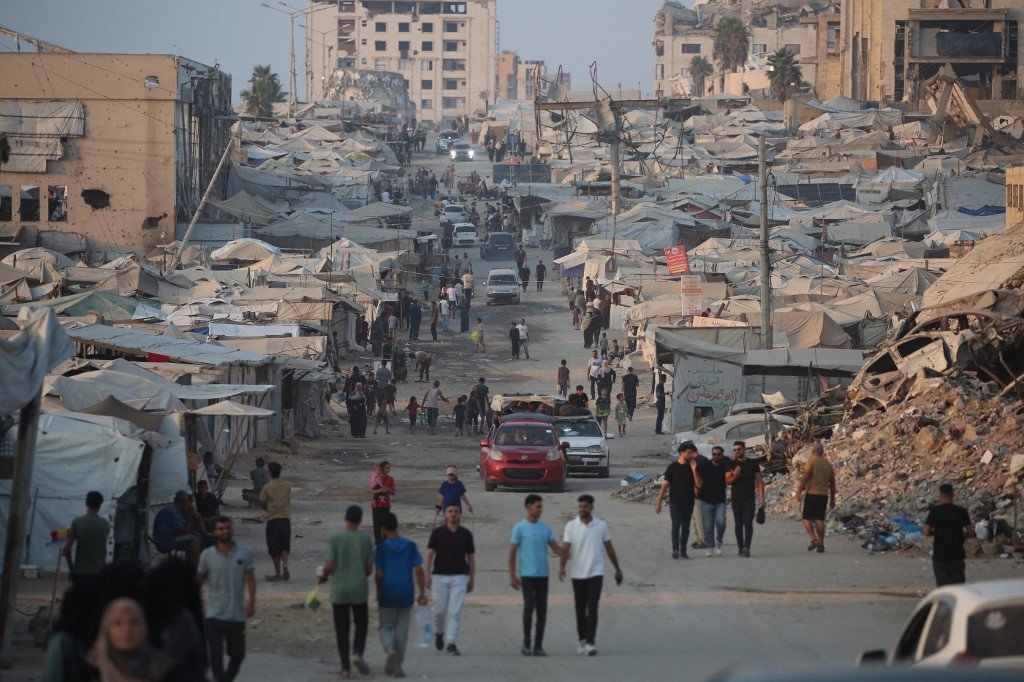
Israel has carried out none of the three sets of provisional measures the International Court of Justice ordered against it in 2024, South Africa's Department of International Relations and Cooperation said in a statement on Sunday, which argued that the duty to see them enforced falls on every state and not on the judges alone.
Those orders came down in January, March and May 2024. They require Israel to prevent acts of genocide and public incitement to commit it, to stop its military offensive in Rafah, and to let humanitarian aid and basic services reach Palestinians across the territory without delay. Israel was also required to report back on what it had done to comply, and filed such a report in February 2024.
Refusing to comply with the measures, the department said, "undermines their protective function" and clears the way for further destruction of the group they were written to shield. It framed them as protecting not only Palestinians but the court's own authority, since rights destroyed while a case is pending cannot be restored by the ruling that ends it. Every government, the statement said, is separately obliged to take "all necessary action to prevent and punish genocide".
The statement follows a dossier Pretoria filed earlier in the week under Article 11 of the court's internal judicial practice, the provision that lets a standing committee of judges examine material the parties send in.
The dossier counts more than 73,400 Palestinians killed and more than 174,300 wounded since October 2023 — together over a tenth of everyone living in Gaza. Among those who survived, it estimates that 46,000 people, children included, are living with amputations or with traumatic injuries to the brain and the spinal cord. It further accuses Israel of detaining Palestinians arbitrarily and moving them into prisons and detention centres beyond the territory, where it says they face torture, sexual and gender-based violence, and treatment that is cruel, inhuman and degrading.
The Palestinian rights organisation Al-Haq welcomed the submission and urged the judges to go further on their own initiative, without waiting for either party to ask, by issuing additional provisional measures while the case remains undecided.
Pretoria has been assembling this record across the United Nations for close to two years. It brought the genocide case in December 2023, the first state to do so, and has since put dossiers before the Security Council three times, in May 2024 and again in February and September of last year. Last October it took the specific question of starvation to the General Assembly and to the Economic and Social Council, asking both to intervene under Article VIII of the Genocide Convention.
Each of those bodies could have acted on what it was sent, and none did. That is the shift the statement marks. Having spent two and a half years asking the court to say what the law requires, South Africa is now telling the states that signed the convention that they already know — and that the obligation it went to The Hague to establish does not wait on the next order from the bench.