
Gaza Recovery Plan Faces Political and Security Hurdles
A new six-month blueprint outlines initial steps for rebuilding, but ongoing violence and governance questions complicate implementation.
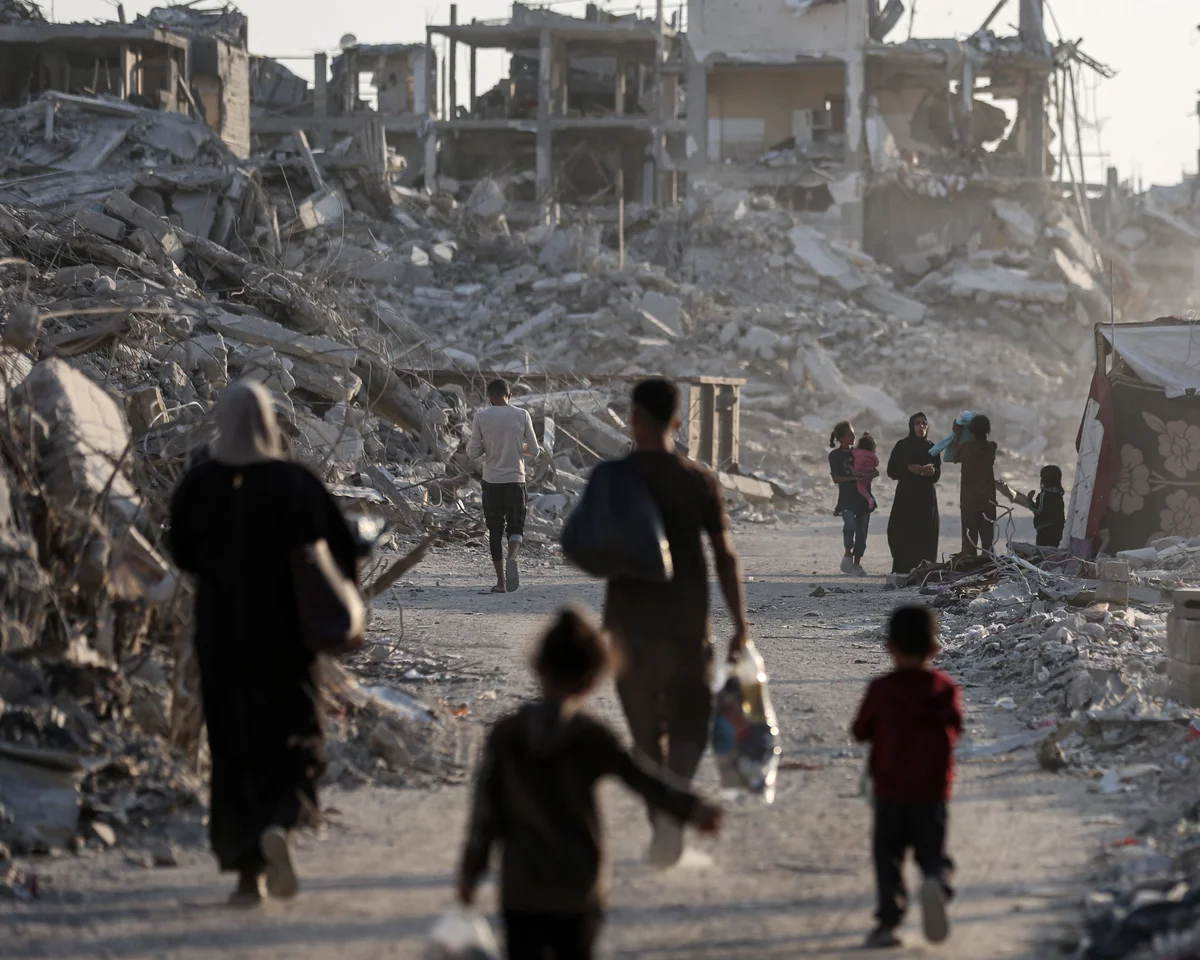
The US-backed Board of Peace unveiled a 2.45 billion dollar initial recovery plan for Gaza on Wednesday in New York. This announcement highlights a stark paradox where billions are discussed internationally while Israeli attacks and political restrictions continue to block meaningful reconstruction efforts for Palestinians living in the devastated territory.
The six-month blueprint contains sixty-six projects aimed at restoring basic services and clearing rubble. It focuses on providing temporary shelter, rehabilitating hospitals and roads, and restoring water and electricity infrastructure. The plan also seeks to support economic recovery through targeted interventions in key sectors that have suffered catastrophic damage during the recent conflict.
However, the presentation occurred while Israeli attacks continued to kill Palestinians across Gaza. This contradiction underscores the failure of the current ceasefire to provide complete security. International officials discussed rebuilding strategies even as daily realities on the ground remained deadly, creating a significant disconnect between diplomatic plans and the immediate safety needs of the local population.
Global bodies estimate that full recovery will cost roughly 71.4 billion dollars over ten years. This figure far exceeds the current proposal, with direct physical damage alone accounting for 35.2 billion dollars. The massive gap highlights the extraordinary scale of destruction that requires sustained financial commitment beyond the initial phase outlined by the board.
Reconstruction progress is tied to a broader political framework involving Hamas relinquishing governance and Israeli forces withdrawing. Work is envisaged to begin in Rafah and move northward, raising questions about civilian control. Critics ask whether the ability to rebuild homes and hospitals should depend on military negotiations over which ordinary civilians have little direct influence or authority.
The plan proposes an international board overseeing a Palestinian technocratic administration, sparking sovereignty concerns. Questions remain about who controls borders and material entry. Without Palestinian agency and unrestricted access to construction materials, financial commitments may remain theoretical. The central issue is not just funding, but ensuring Palestinians can determine their own future and rebuild their communities safely.