
Israeli forces kill Fathi Khazem at his home in Jenin
His 12-year-old son, the only witness inside the flat, says soldiers shot his father after he refused an order to kneel. The army says he came at a soldier with a knife. His body has not been returned.
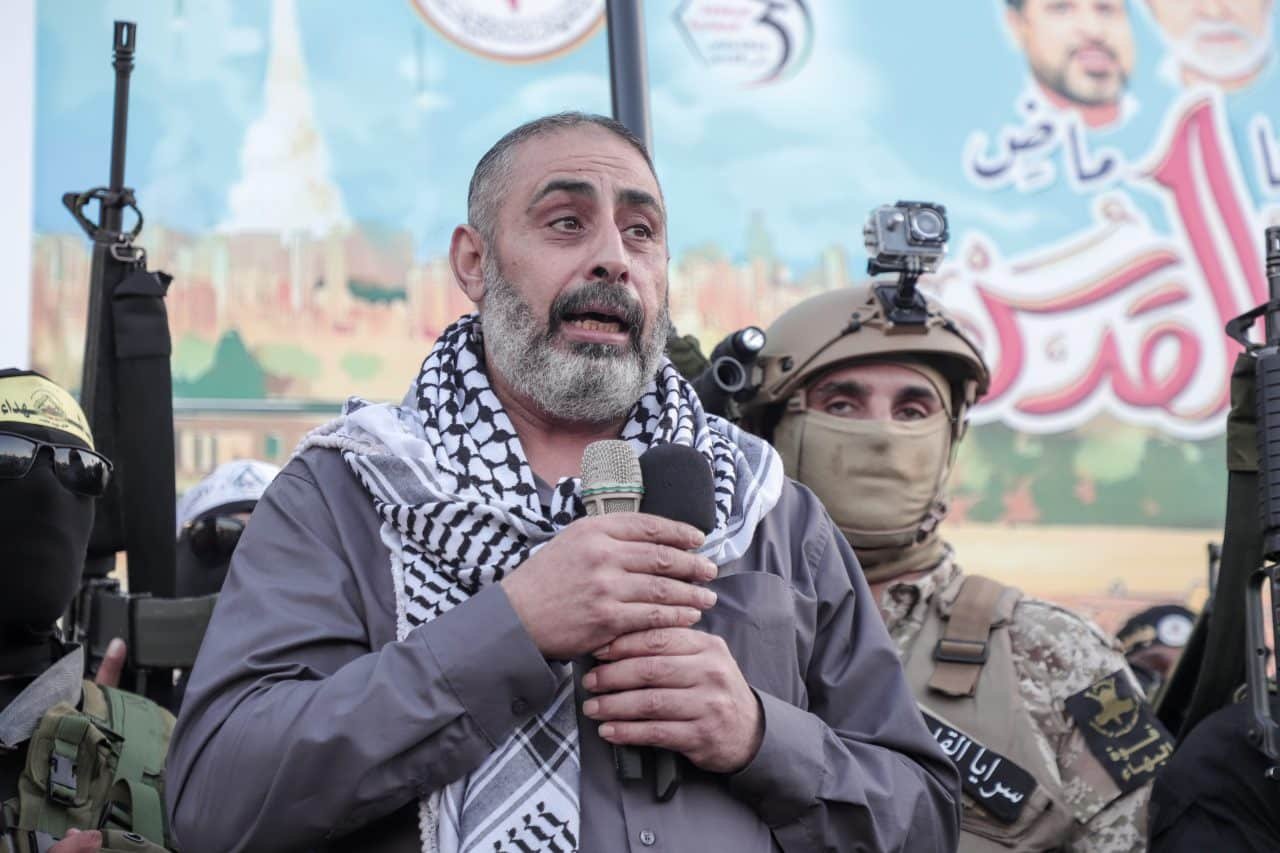
Israeli soldiers killed Fathi Khazem, 58, in the early hours of Friday at the flat where he had been living in the al-Masarwa neighbourhood of Jenin, in the northern occupied West Bank. He was at home with his son Adam, 12, when the soldiers blew open the door and came in. According to the family, they had first taken a young man from the neighbourhood and made him walk in front of them.
Adam was the only member of the family inside. He said the soldiers ordered his father to raise his hands, take off his clothes and kneel, and that his father refused. "Who are you that I should kneel before you?" he said his father asked them.
An argument followed. Relatives said the soldiers began beating Khazem inside the flat and that he tried to fend them off before he was shot from close range. Adam said one soldier shot his father in the hand first, and that seven more rounds were fired at him afterwards. He was given no medical treatment and bled to death where he fell. The Israeli army has held on to his body since.
The boy said he ran towards the soldiers holding up his father's identity card, hoping it would stop them. His father was shot in the chest and the head in front of him.
The soldiers then shut Adam and the neighbour in the bathroom and made them both strip. The neighbour, who understands Hebrew, said he heard the soldiers weighing aloud whether to kill the two of them as well.
In a statement, the Israeli army said its forces had killed a Palestinian carrying a knife who had tried to stab a soldier in the Jenin area, and that no soldier was hurt. An Israeli television channel had reported the killing earlier in similar terms. The family rejects that account. Khazem's brother Amin said the arrest attempt was a pretext and described the killing as a deliberate assassination rather than an operation that went wrong, and said people at the scene saw his brother shot again after he was already down.
Adam has not spoken much since. An uncle said the boy remains in severe distress and has not cried once: imagine a 12-year-old, he said, "watching his father being killed before his eyes, then stripped of his clothes and locked in a bathroom" beside a stranger.
Khazem was known publicly as Abu Raad, after his eldest son. Raad Khazem carried out a shooting attack on Dizengoff Street in Tel Aviv in April 2022 and was killed in Jaffa hours later after a manhunt. A second son, Abdul Rahman, was killed by Israeli forces in September of the same year, after months of pursuit in the Jenin refugee camp. Their father, a retired colonel in the Palestinian Authority's security forces, became a public figure in the period that followed, appearing on television to urge people not to give ground, and refused Israeli demands that he hand himself in.
In 2023 Palestinian Authority officials brokered an understanding with Israel on his behalf: he would leave the Jenin refugee camp, stay out of public view and stop making public statements, and in exchange he would no longer be pursued or arrested. He disappeared from view after that and was living in a one-bedroom flat with a small kitchen when the soldiers came. Amin Khazem said the family is still trying to work out what changed.
Three of the family's homes are already gone. The Israeli military demolished their flat on al-Madaris Street in Jenin in 2022, along with a small house in Deir Ghazaleh east of the city where Fathi Khazem had been staying; the family home on Mahyoub Street inside the refugee camp is believed to have been destroyed during the army's continuing operation there, which has flattened dozens of houses.
The orders Adam described are not particular to this raid. Two days earlier in Qabatiya, south of Jenin, soldiers held men for questioning in the street and wrote numbers on their bodies and clothing.