
Spare-parts curbs leave 70 percent of Gaza vehicles off the road
A rights centre puts the direct damage to transport and communications at $2.8 billion, and says the same shortage is taking ambulances and civil defence trucks out of service one engine at a time.
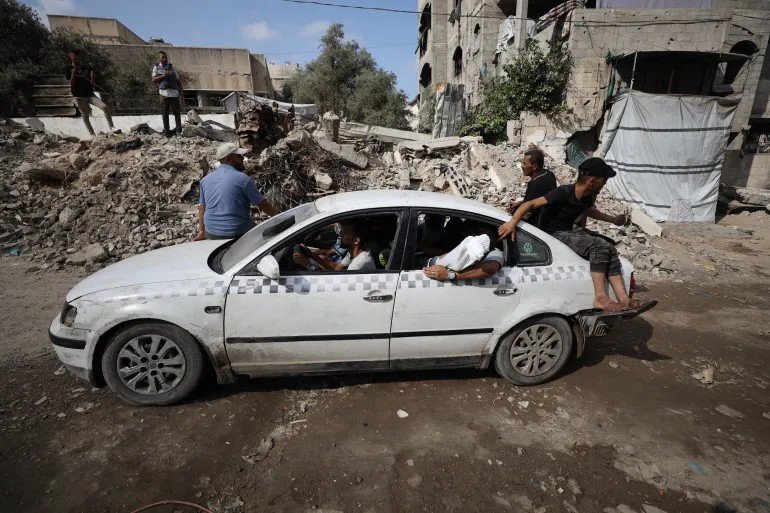
The Gaza Center for Human Rights said on Sunday that the Gaza Strip's transport sector is close to complete collapse, with roughly 70 percent of civilian vehicles fully or partly out of service because Israel is holding back the entry of replacement parts, tires, engine oil and the rest of what maintenance requires.
The centre attributed the vehicle figure to official data held by authorities in the territory, and valued the direct damage done to transport and communications at about $2.8 billion.
The supplies are being withheld under a classification of "dual-use" — goods treated as capable of military application as well as civilian. The centre said that classification is being applied arbitrarily to items whose only use in Gaza is to keep ambulances, water systems, sewage networks and bakeries running, and that the restrictions have carried on since the ceasefire took effect in October 2025 rather than easing with it.
Emergency fleets have taken the sharpest damage. Engines are failing, cooling systems are breaking down and the original oils they were built to run on have been used up, leaving vehicles idle for want of parts that cannot be brought in. Figures from Gaza's Government Media Office record 211 ambulances targeted by the end of 2025, along with 23 civil defence vehicles. In a territory where casualties can occur at any hour, the centre said, a single ambulance out of service is enough to delay treatment past the point where it helps.
Prices have moved out of reach at the same time. A single container of engine oil now sells for around $3,500, and for many owners the cost of a repair has passed what the car itself is worth. Abdel Aziz Ahmed, 36, gave up on a private car that has been off the road for months for that reason. Saeed Shirab, 45, said that with tires and oil this scarce, even routine servicing has become unaffordable. Hamada al-Sayed, 33, spends hours each day looking for a ride to work and often ends up walking.
The scale of what has stopped shows in the import figures. Representatives of businesses in the transport trade said more than 800 trucks a day entered Gaza before October 2023; the current restrictions have brought that traffic close to a halt. The centre also noted that Israeli forces control around 70 percent of the Strip's land area, a separate constraint on where anything still running can go.
The shortage reaches well beyond private travel, because the machinery that delivers basic services runs on the same consumables. Hospitals, water wells, desalination plants, sewage pumping stations, bakeries, schools and aid convoys all depend on engines that need oil and parts on a schedule. UNICEF has warned previously that shortages of tires, oils and spare parts threaten the continuity of water, sanitation and humanitarian work. The centre's warning is that a failure in desalination and sewage pumping would add an environmental and public health emergency to the one already under way.
It asked the international community, the United Nations and the Security Council to press Israel to lift the restrictions, called on states party to the 1948 Genocide Convention to act on their obligations, and urged the International Criminal Court to weigh the effect of curbs on transport and emergency services in its existing investigations.